St Lawrence Road
78 St. Lawrence Road is a protected mid-terrace Victorian house in Clontarf. St. Lawrence Road is a nineteenth-century streetscape characterised by brick facades, slate roofs, railings and timber sash windows. The project combines repair, restoration and extension works intended to support the long-term occupation of the house while retaining its special character and architectural integrity.
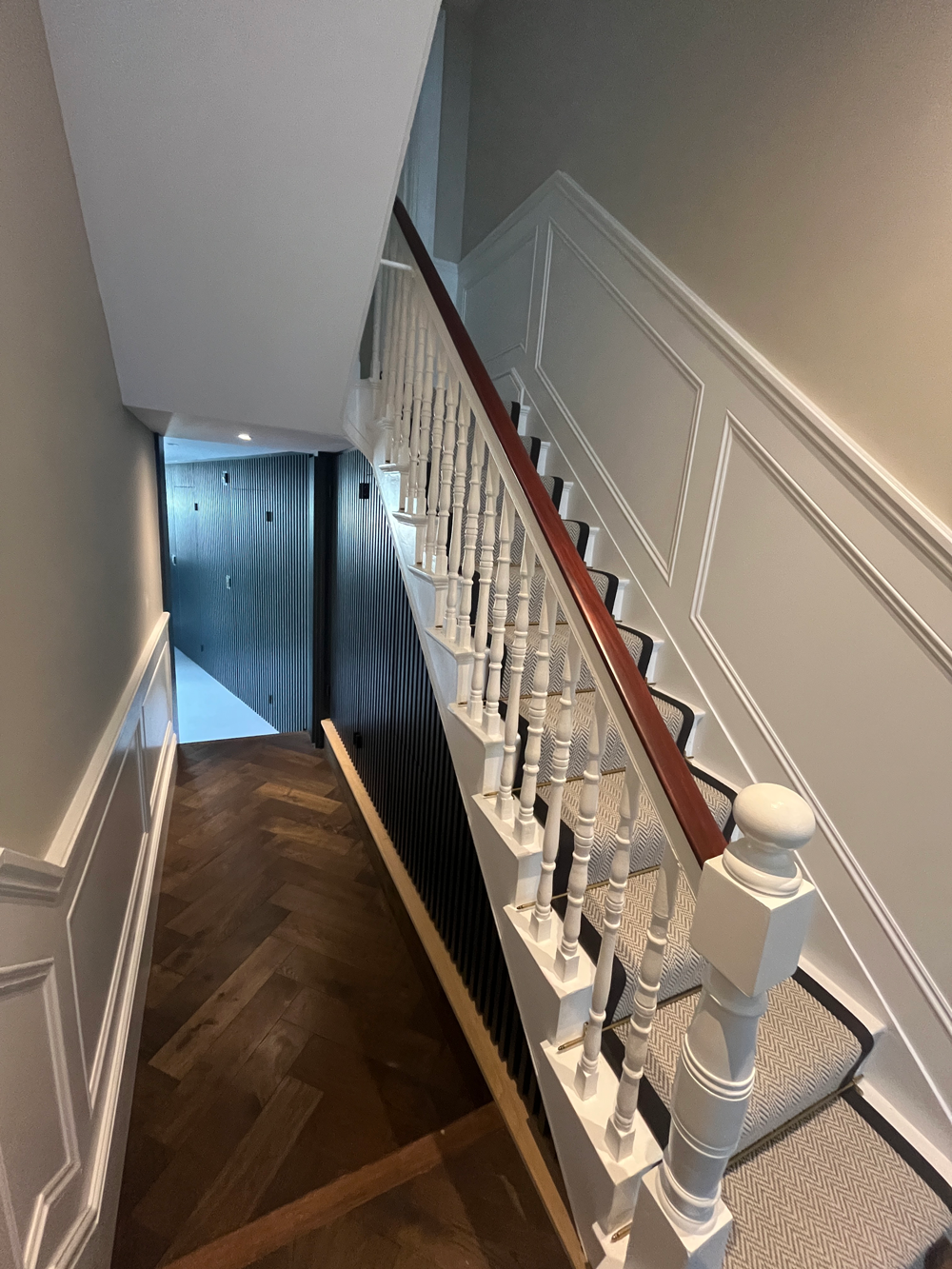
The existing house retained much of its original joinery, plasterwork and spatial arrangement despite a series of later alterations, including replacement uPVC windows and changes to the rear annex. The design approach focused on repairing and stabilising the historic fabric before introducing new work.
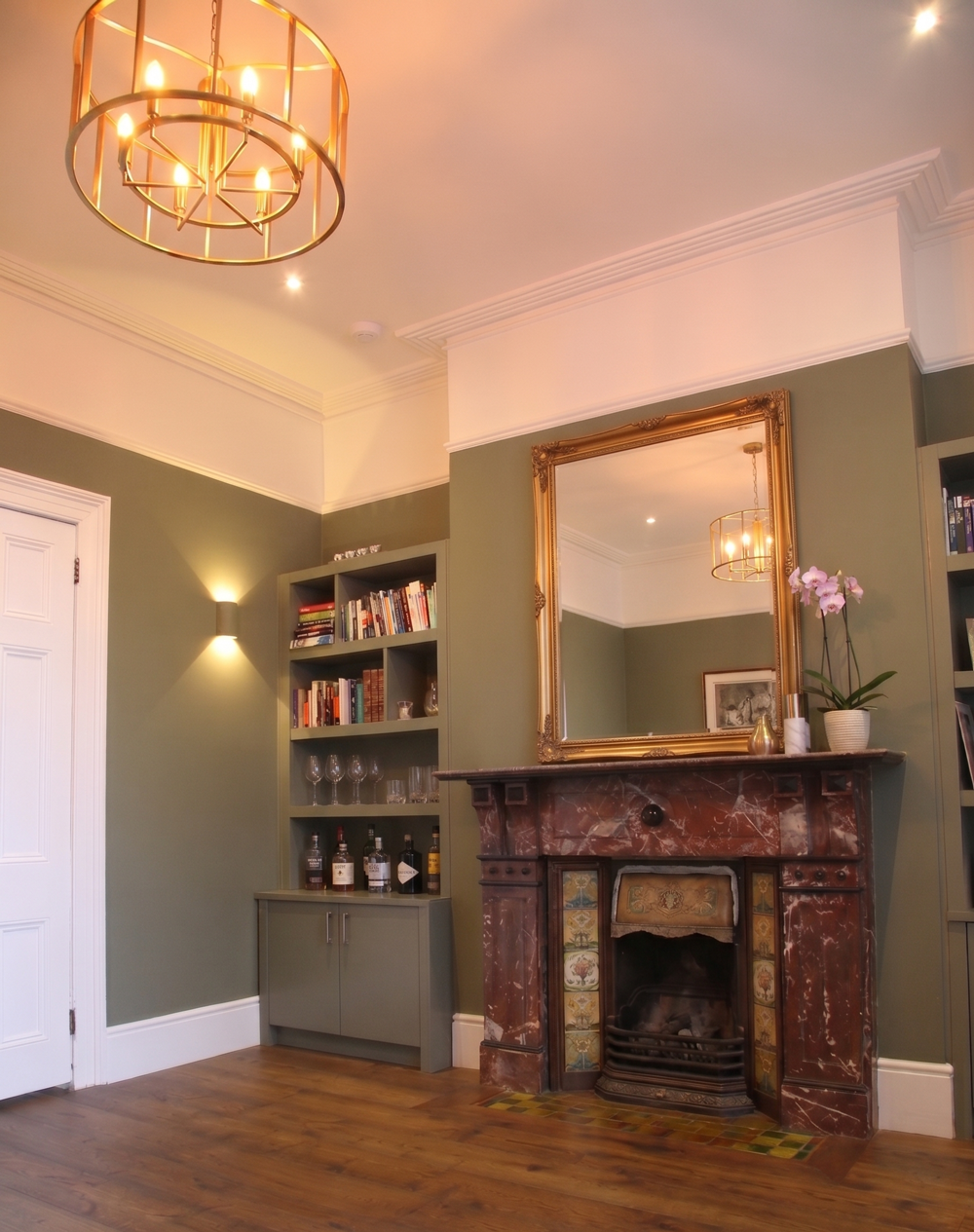
The restoration included reinstating timber sash windows, repairing decorative plasterwork and joinery, strengthening the roof structure and replacing modern rainwater goods with cast iron elements appropriate to the character of the house. Original fireplaces, cornices and proportions were retained wherever possible, with interventions limited to careful localised repair.
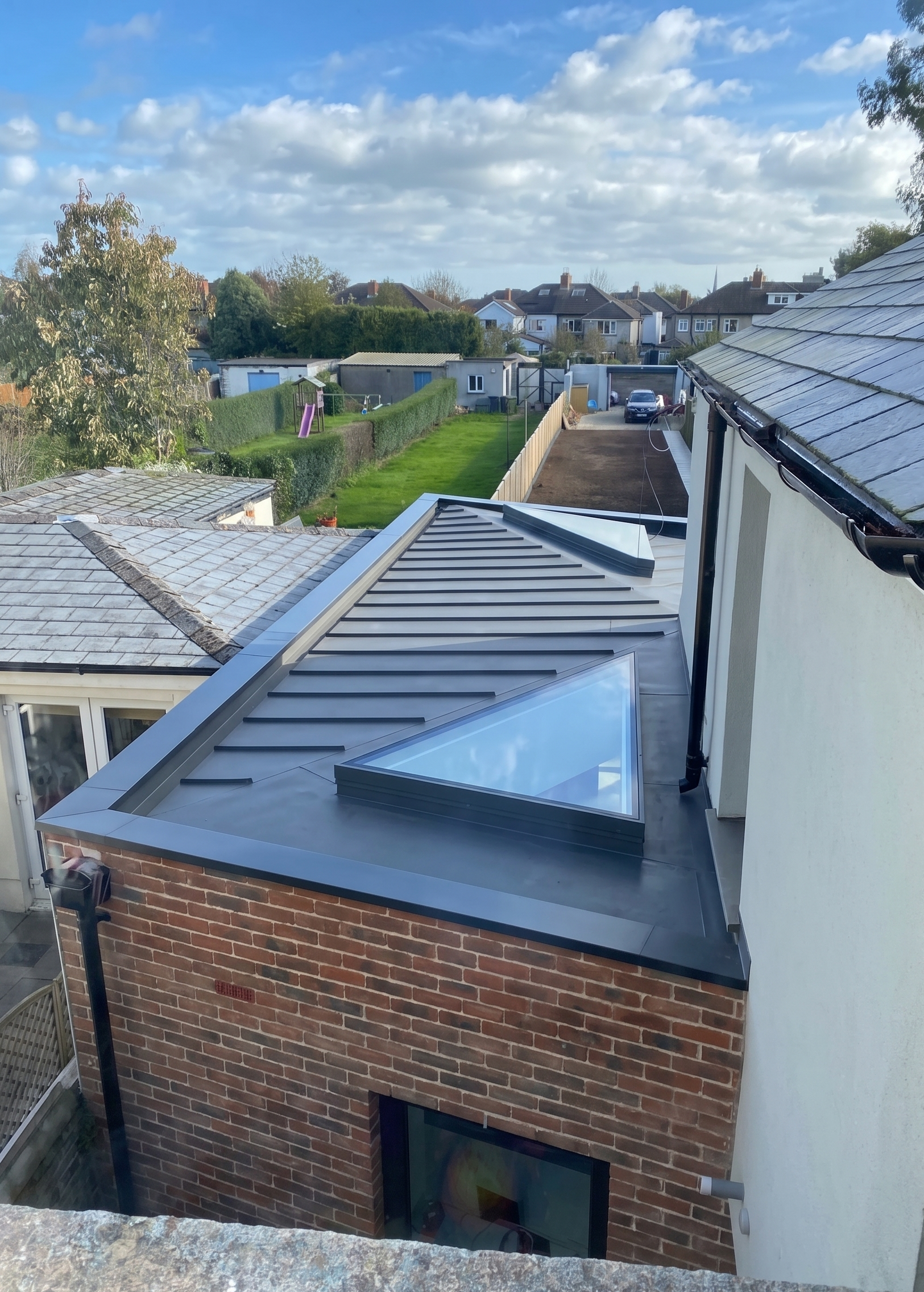
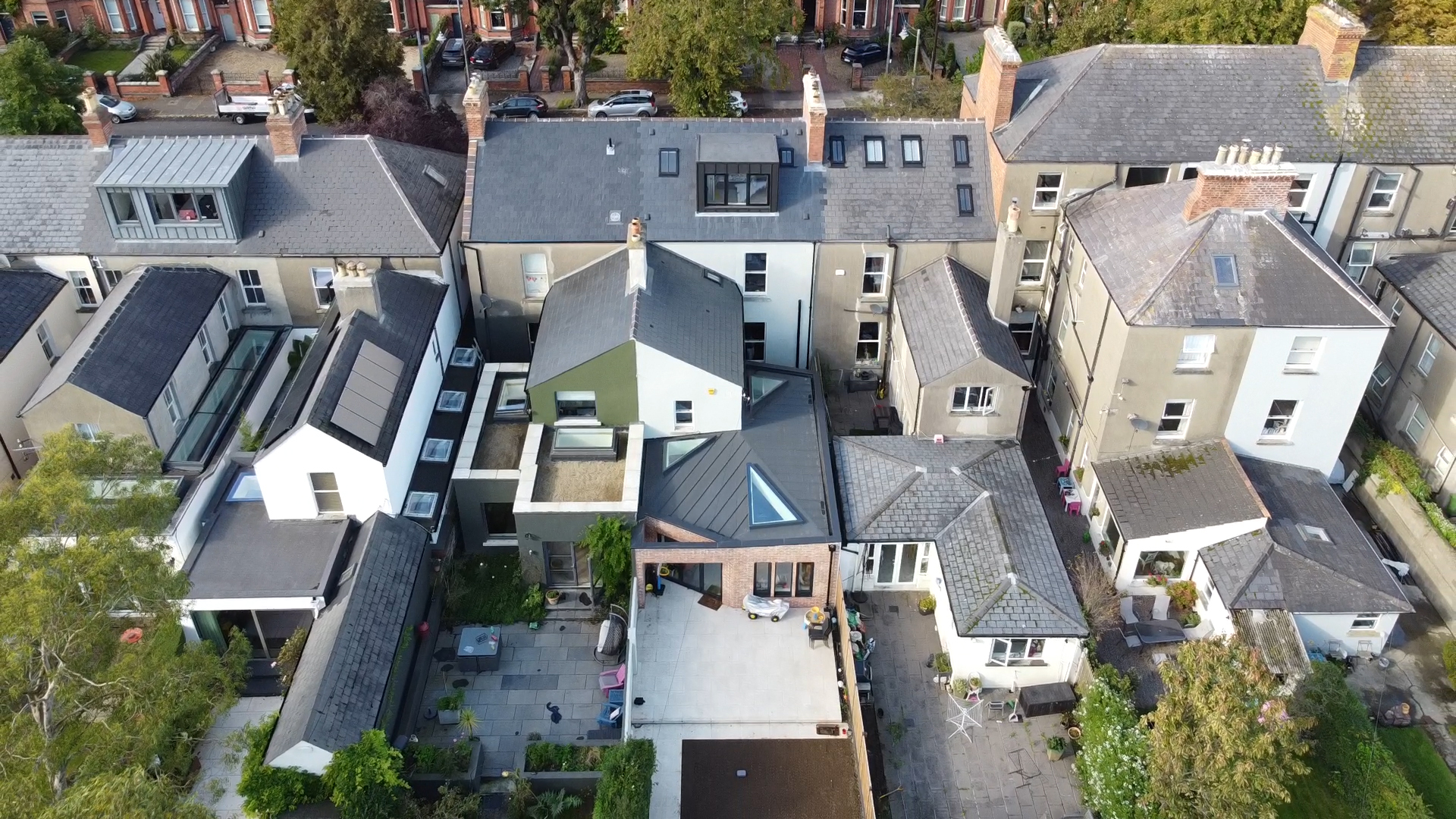
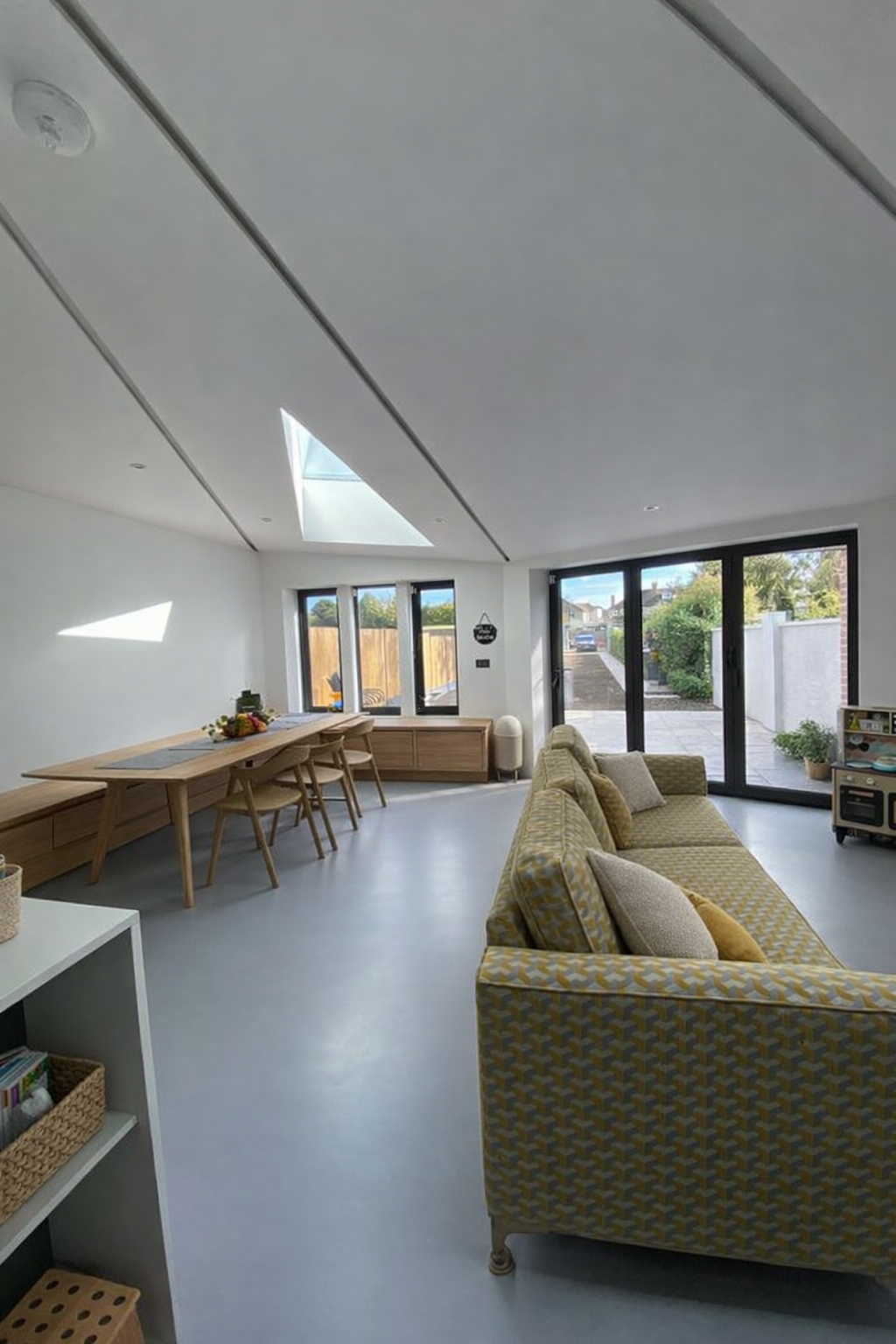
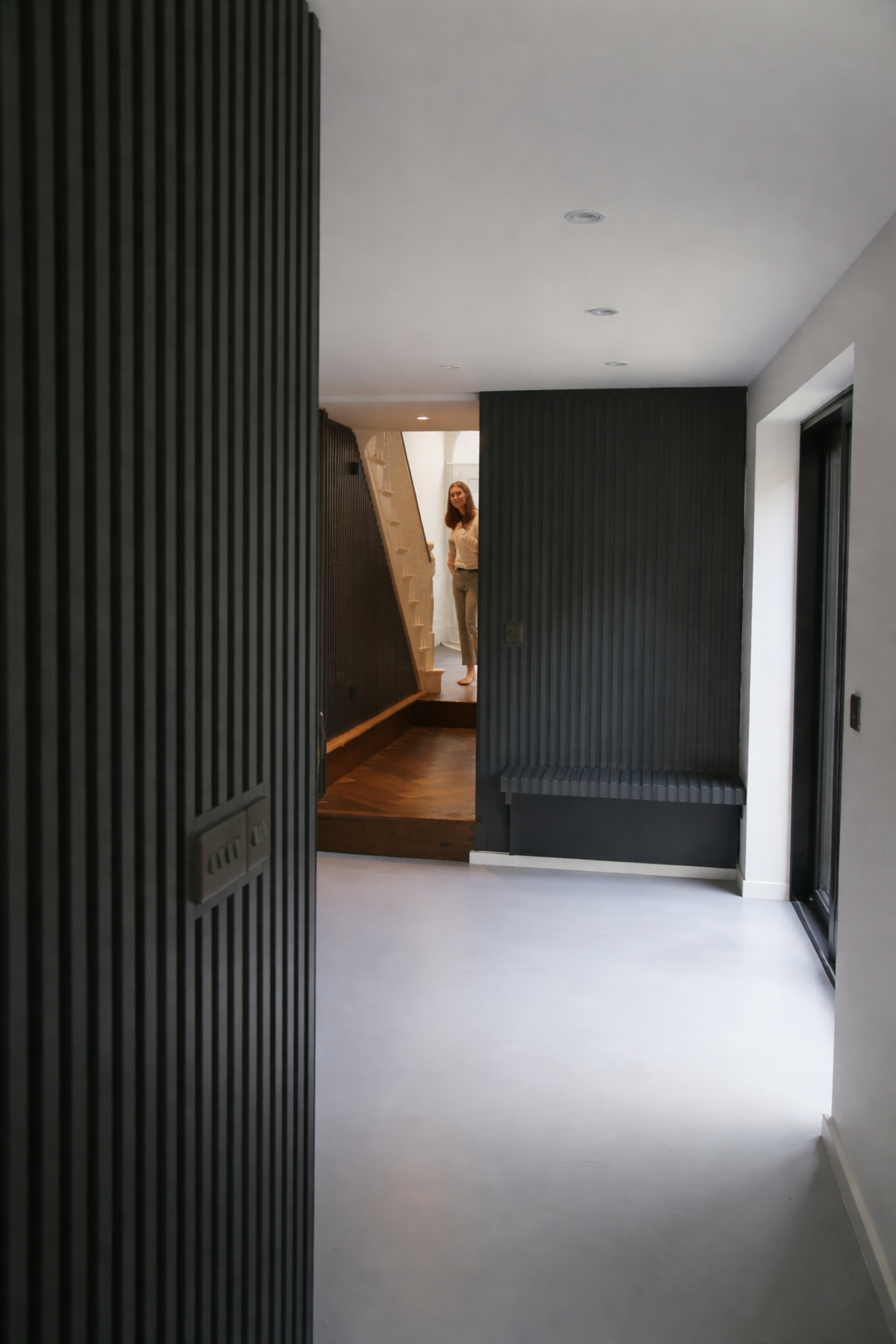
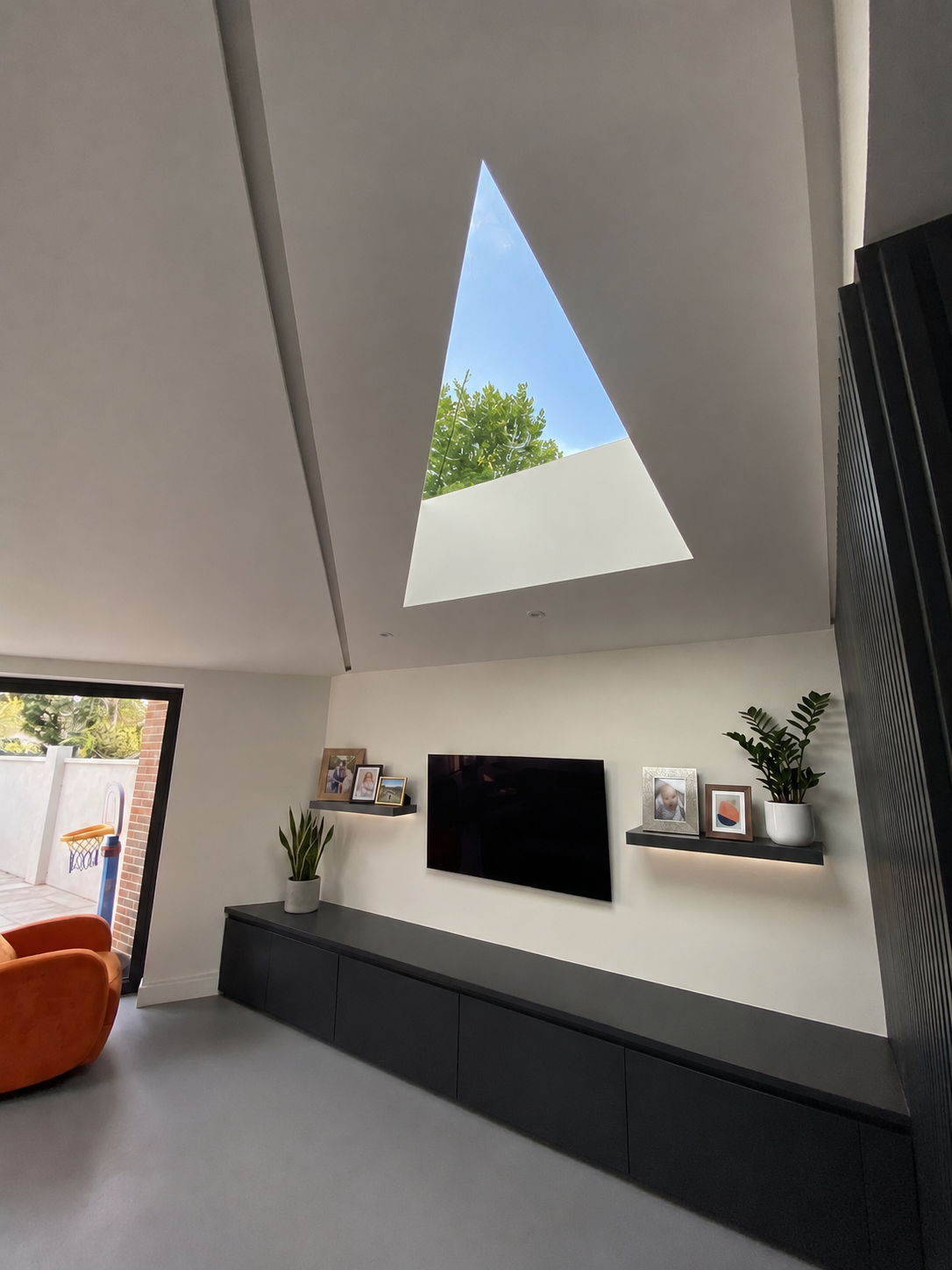
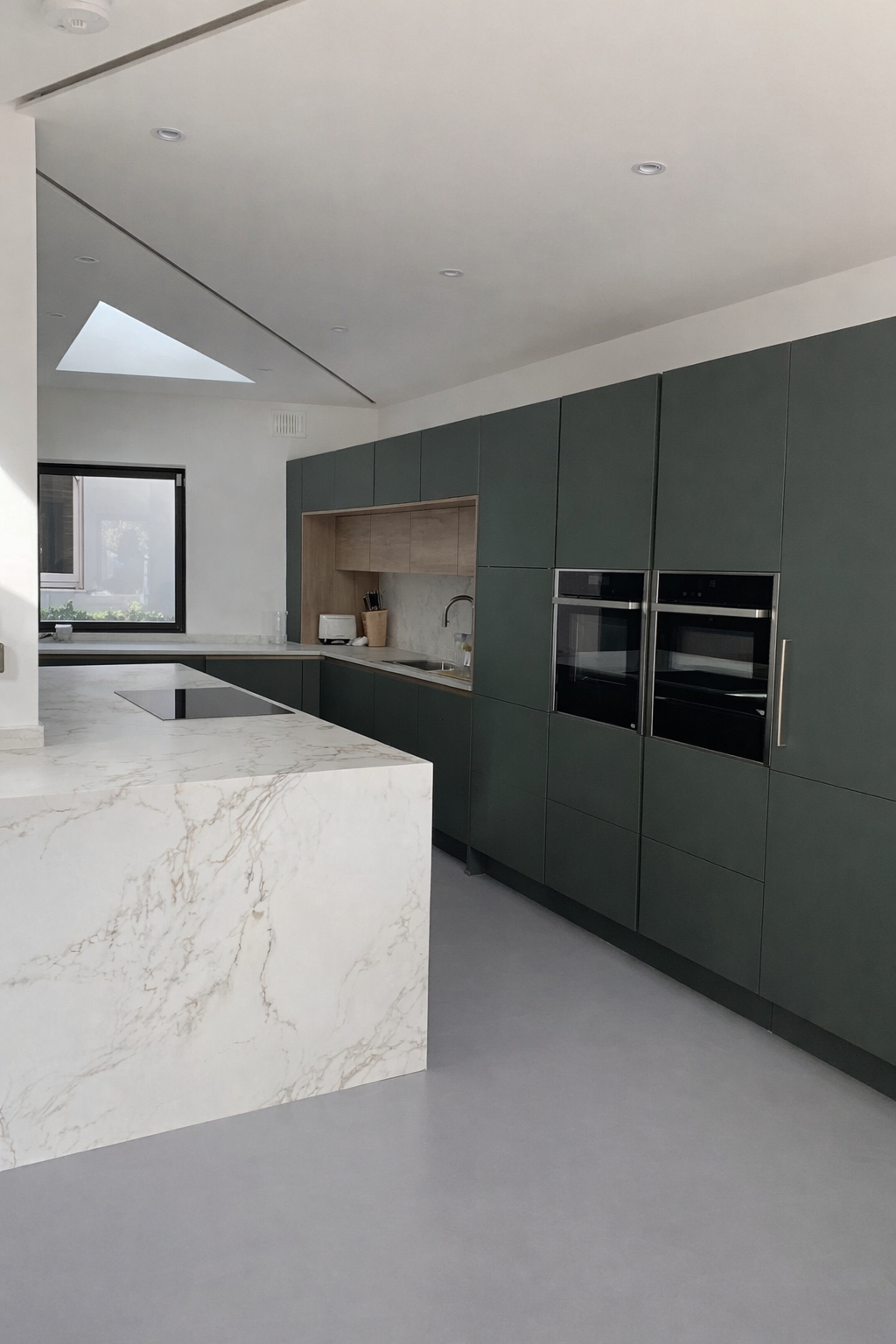
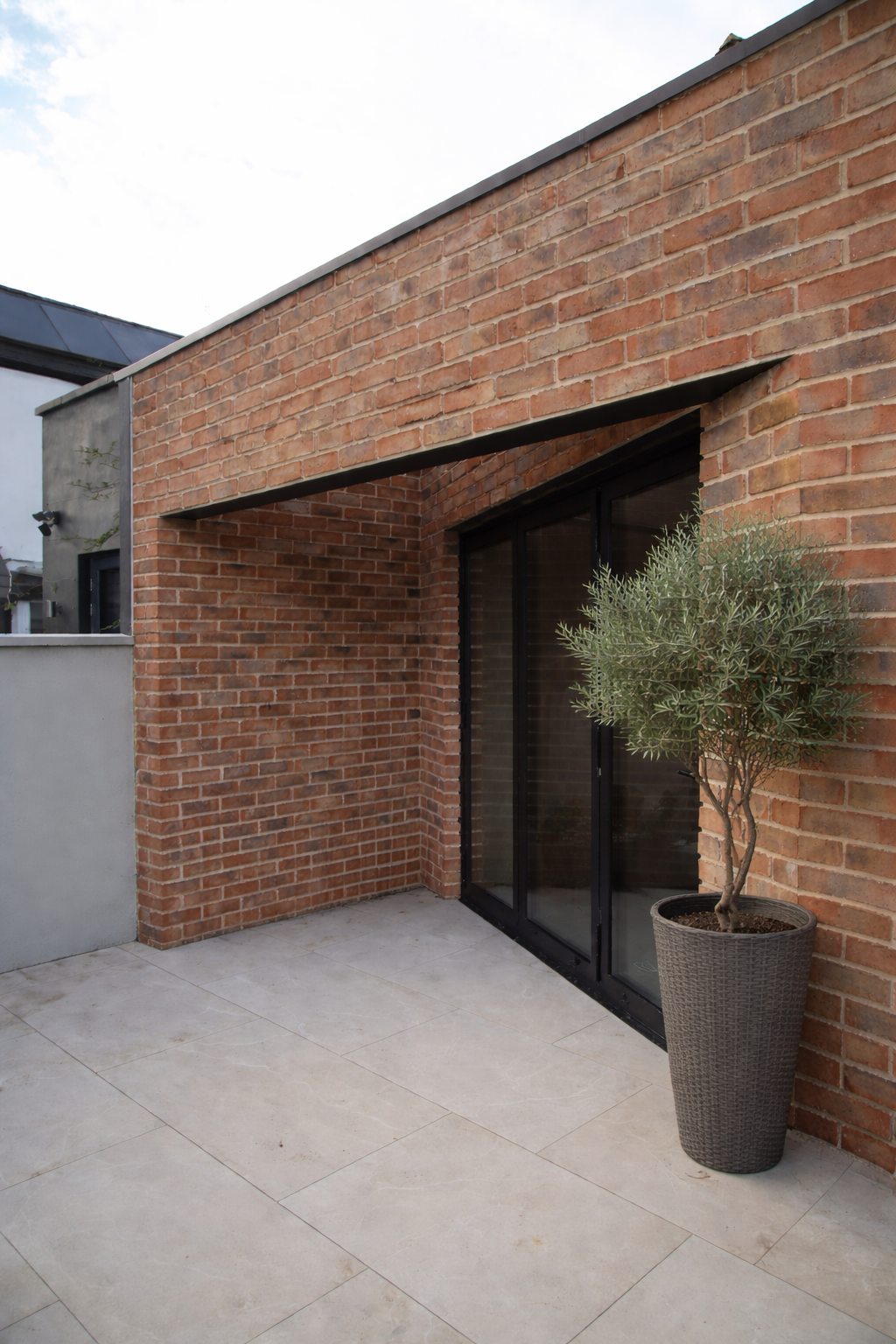
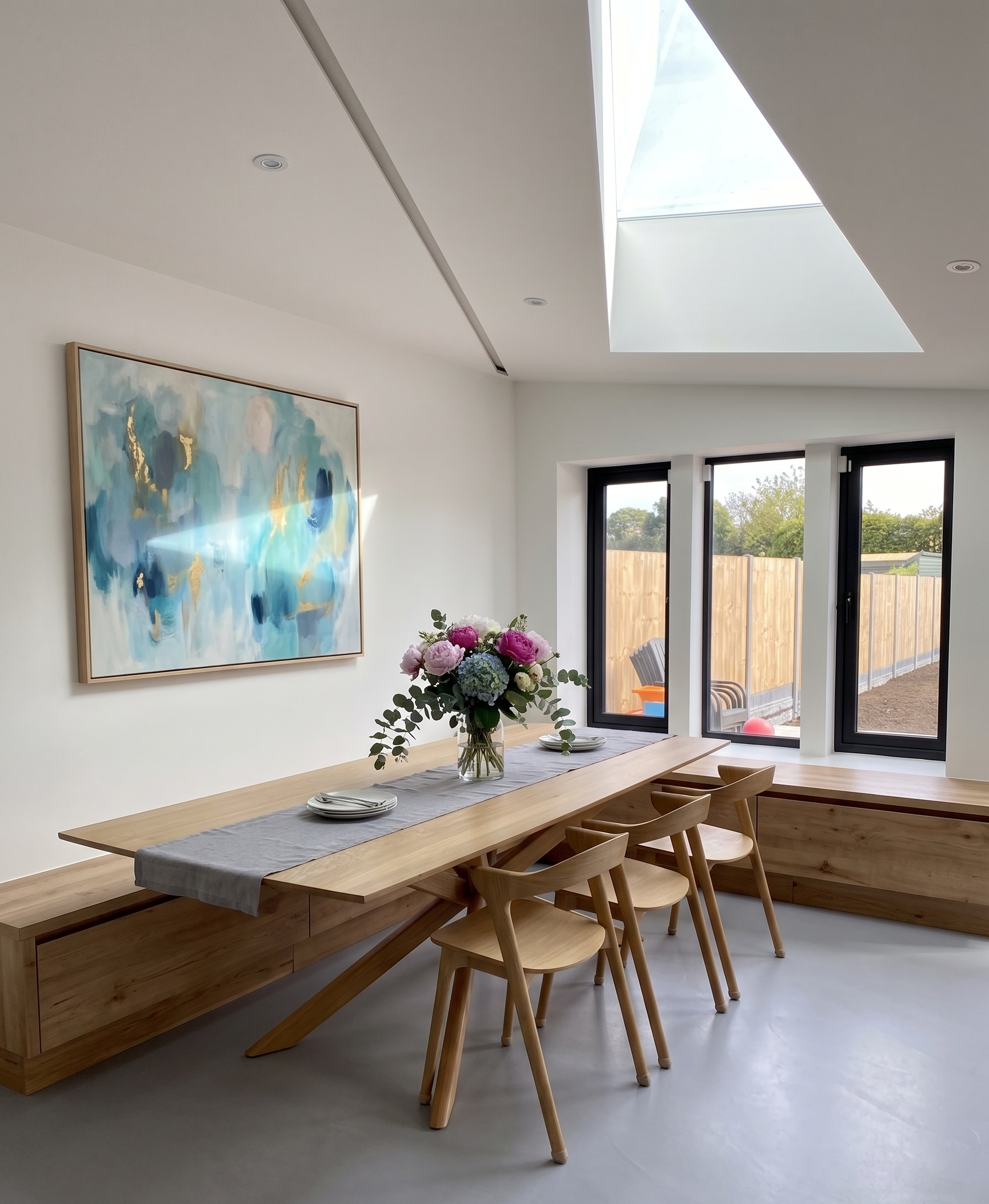
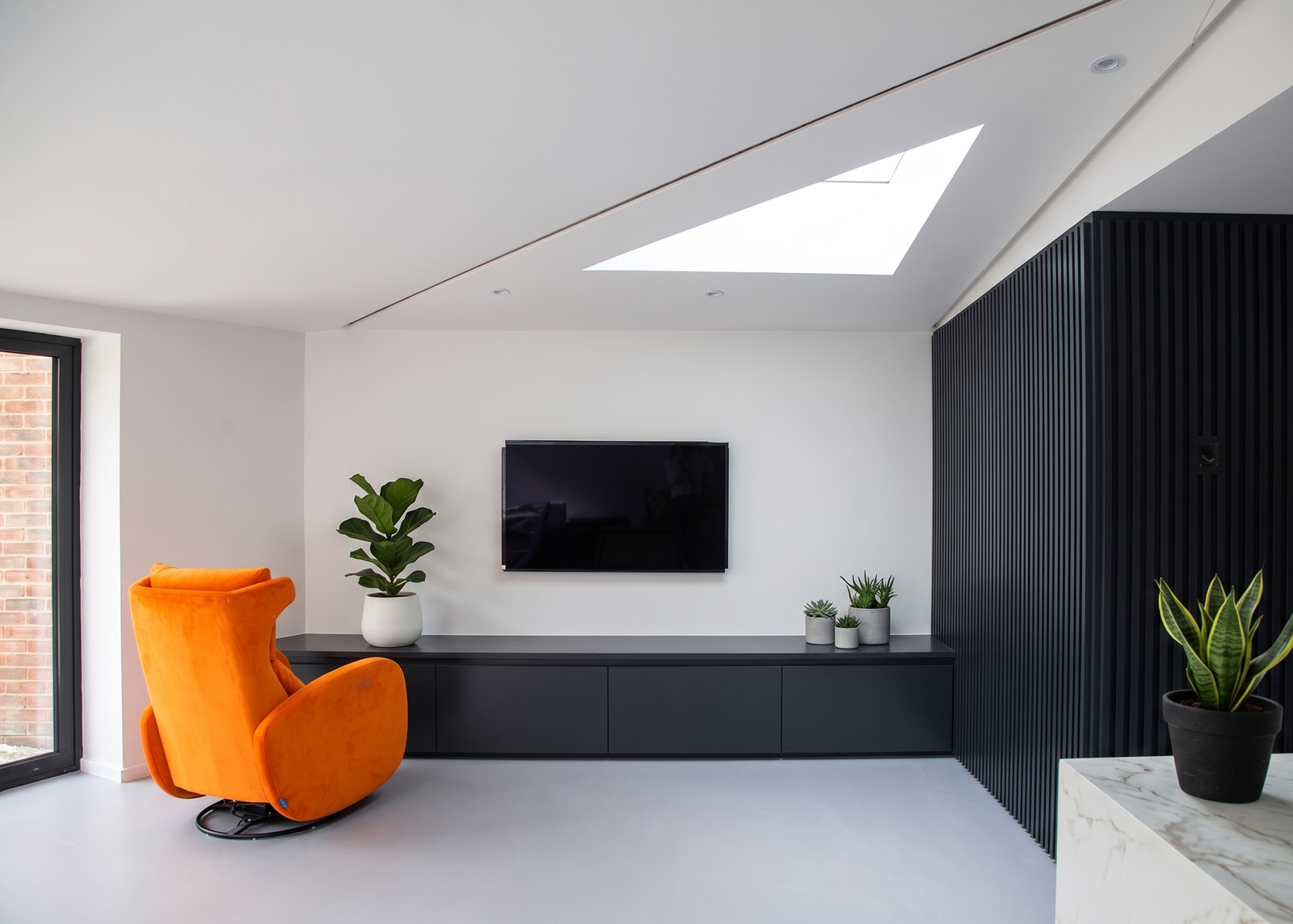
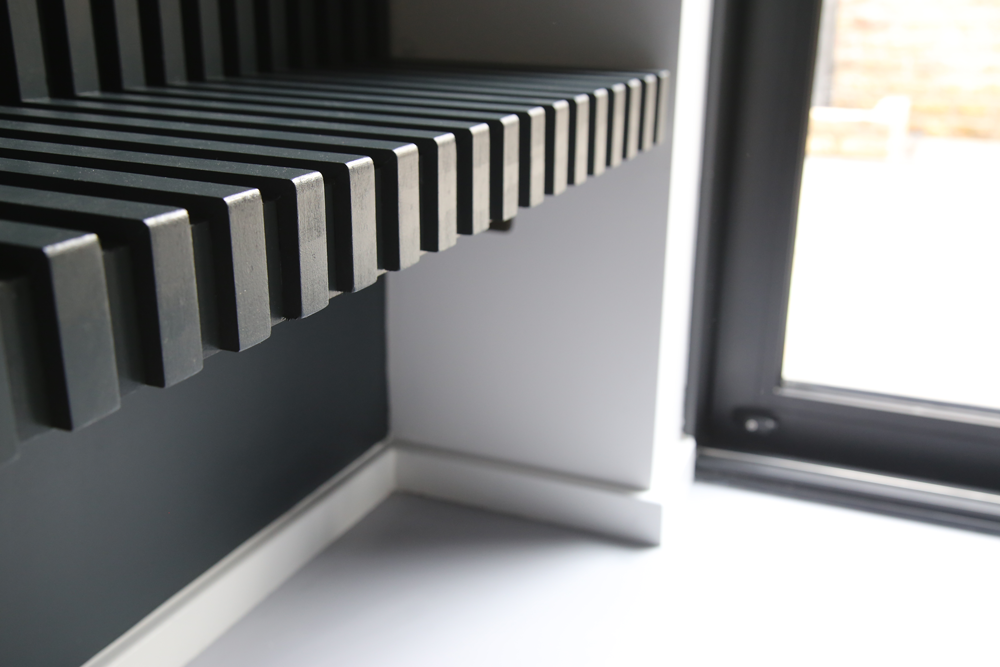
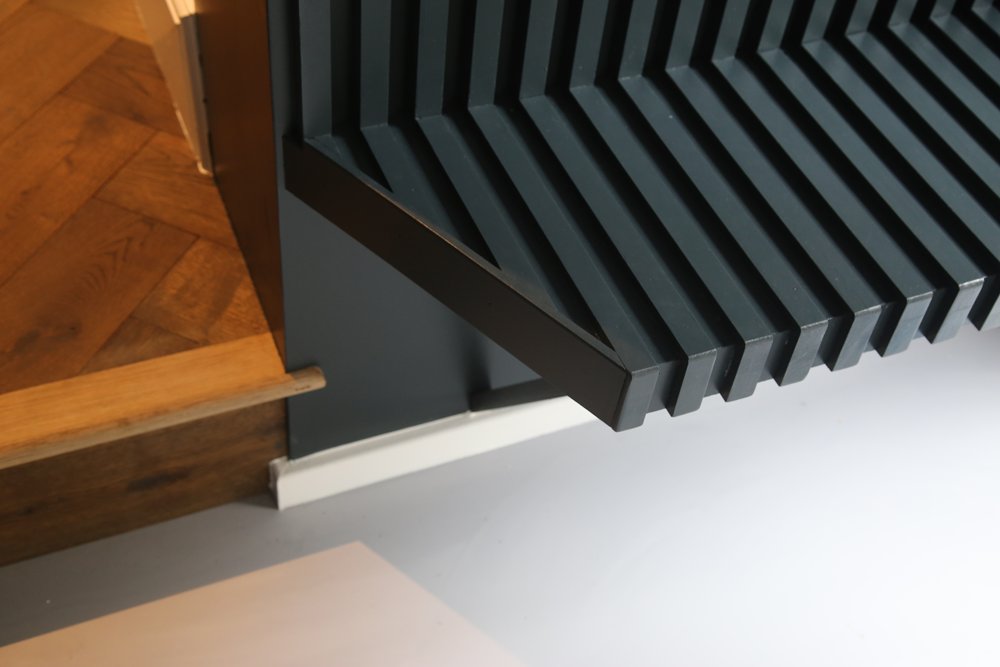
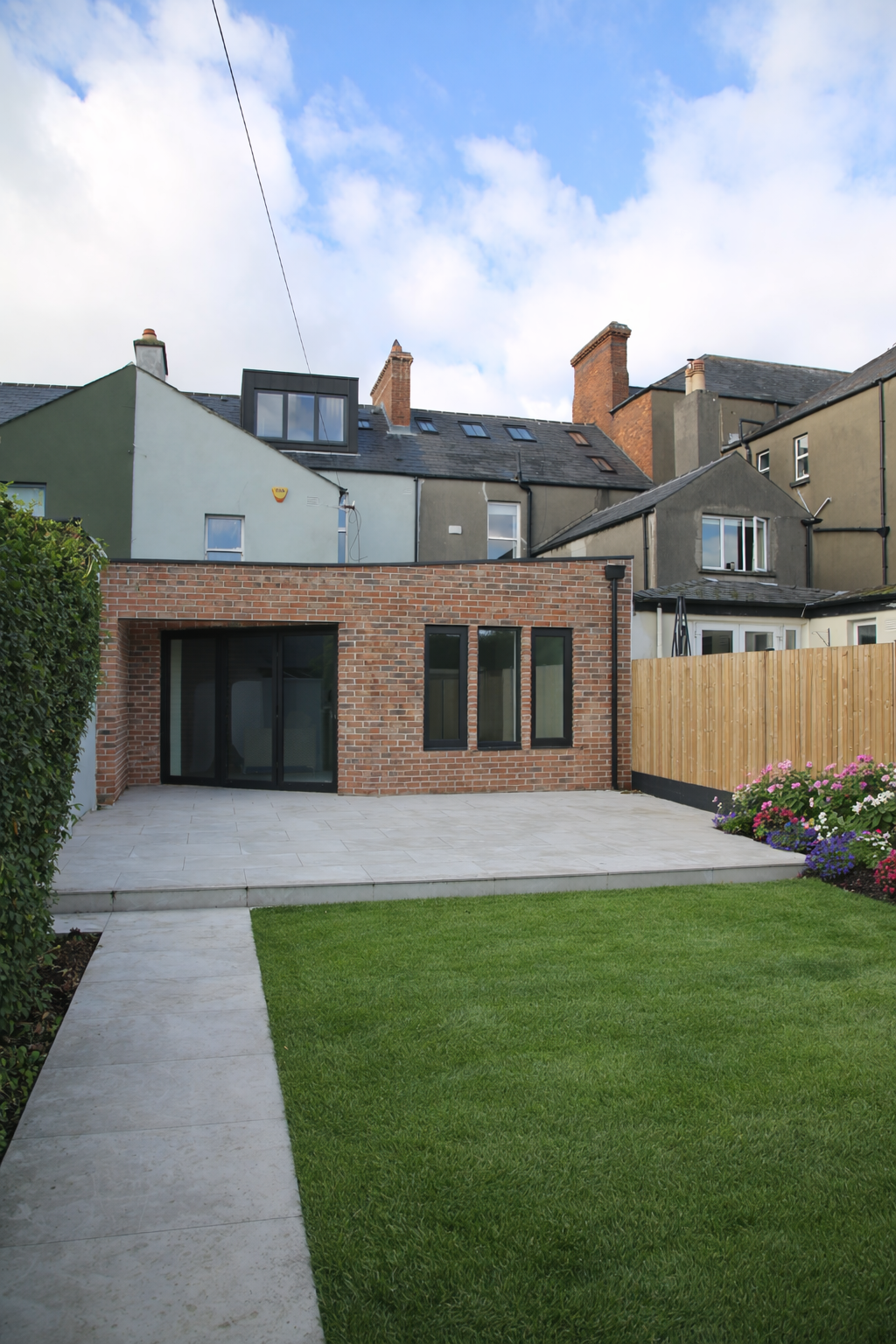
The extension is organised around a generous kitchen and dining space, designed as the social centre of the house. A series of angular rooflights are integrated into the folded zinc roof, bringing controlled daylight deep into the interior while shaping the character of the rooms throughout the day. Internally, the palette is restrained with pale floors and walls balanced against darker joinery and integrated storage elements to support family life. Built-in seating lines the perimeter of the dining area, allowing the room to function as both a gathering space and a quieter place of retreat overlooking the garden. Large openings connect directly to the rear terrace while maintaining carefully framed views and privacy from neighbouring properties. Viewed from above, the roofscape becomes an important part of the architectural composition. The faceted roof geometry reduces visual bulk while drawing light into the plan and mediating between the scale of the extension and the varied forms of the surrounding houses.
The project demonstrates how a modest domestic extension can reshape everyday living through proportion, light and careful integration rather than through scale alone. Internally, the project reorganises the rear accommodation to create a more coherent family layout while preserving the hierarchy and proportions of the principal rooms. The new design is intended as a continuation of the building’s history. One that repairs historic fabric, clarifies later alterations and allows the house to adapt quietly to contemporary living.